
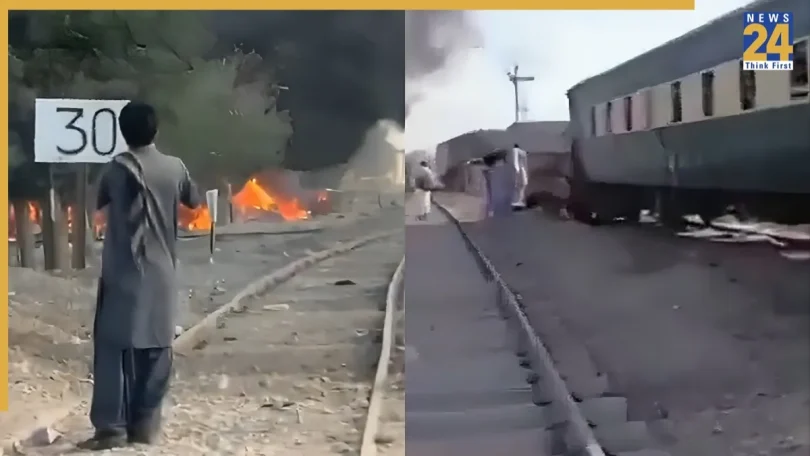
At least 23 people were killed and over 40 people were injured after a vehicle-borne suicide attack targeted a passenger train heading towards Cantt near Chaman Phatak in Quetta, Balochistan, Pakistan. The powerful blast caused a massive explosion in the area, leading to the derailment of the train and triggering a major fire. Rescue teams, ambulances, and security forces quickly reached the site and cordoned off the area as smoke and flames continued to rise from the wreckage.
Initial reports also mentioned gunfire at the scene, adding to the chaos during the early rescue operations.
What exactly happened?
Authorities said the passenger train was targeted in a suicide blast while it was passing through a sensitive route near Quetta. The impact was so strong that several coaches derailed, causing heavy casualties and injuries. Officials are still investigating the exact method used in the attack and whether more explosives were involved.
Why has Quetta region become so tense?
Quetta and surrounding areas in Balochistan have seen rising instability in recent weeks. The N-40 Quetta–Taftan Highway has witnessed repeated incidents of armed activity, road blockades, ambushes, and temporary control of key stretches. Reports also mention attacks on convoys, mineral transport trucks, and infrastructure such as bridges and highways, disrupting daily movement and trade routes.
Who is responsible for the attack?
A local press statement linked the attack to militant activity, stating it followed losses suffered by BLA militants in clashes with security forces across Balochistan. The Baloch Liberation Army has reportedly claimed responsibility for multiple operations in the region, alleging control over strategic routes and accusing authorities of exploiting local resources. However, official confirmation from Pakistani authorities on this specific train attack is still awaited.
First published on: May 24, 2026 12:28 PM IST
Get Breaking News First and Latest Updates from India and around the world on News24. Follow News24 on Facebook, Twitter.
End of Article
Related Story


