
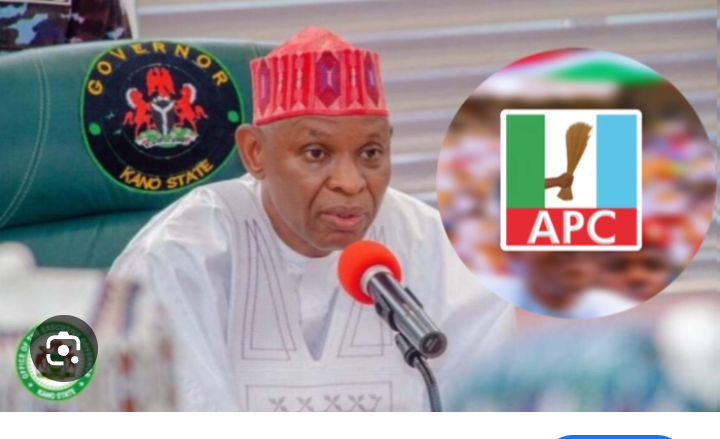
Spokesperson to the Kano State Governor, Sunusi Bature, says the All Progressives Congress (APC) in the state is operating as a united political bloc, describing the party as stronger, more coordinated, and fully prepared for future elections. Bature made the remarks on Sunday during an appearance on Trust TV’s *Sunday……
Spokesperson to the Kano State Governor, Sunusi Bature, says the All Progressives Congress (APC) in the state is operating as a united political bloc, describing the party as stronger, more coordinated, and fully prepared for future elections.
Bature made the remarks on Sunday during an appearance on Trust TV’s *Sunday Politics*, where he was given a right of reply following an earlier interview by former Kano State Governor, Rabiu Kwankwaso.
The exchange followed comments reportedly made by Kwankwaso suggesting that the current Kano governor would regret leaving his political camp to join the APC.
Responding, Bature defended the governor’s political decision and addressed issues surrounding party loyalty, defections, and internal political dynamics in Kano and beyond.
He said political leadership sometimes requires difficult but necessary decisions, adding that while mistakes in politics may be forgiven, failure to act decisively can have lasting consequences.
According to him, the governor’s decision to join the APC was a strategic move aimed at strengthening governance and political alignment in the state.
Bature maintained that the impact of that decision is already evident in the growing coordination within the party structure.
He also addressed Kwankwaso’s criticism of political defections, arguing that such criticism appears inconsistent.
According to Bature, Kwankwaso himself moved across different political platforms, including the NNPP, ADC, and NDC, raising questions about political consistency and messaging.
He said political actors should be careful about condemning actions they have personally engaged in, describing such positions as contradictory.
Bature further commented on Kwankwaso’s brief involvement in the ADC, alleging that his time in the party coincided with internal disagreements and factional tensions.
He claimed Kwankwaso engaged with different blocs within the party, including individuals associated with the David Mark-led faction and others aligned with Na’fiu Bala.
According to him, the parallel engagements contributed to confusion and disunity within the party structure at the time.
Bature also argued that Kwankwaso’s movement across several political platforms within a short period reflects what he described as an unstable political pattern.
He alleged that Kwankwaso’s involvement with multiple political formations suggests strategic positioning rather than long-term party commitment.
According to him, such political mobility often leaves behind leadership disputes and factional struggles within affected parties.
Despite opposition narratives and ongoing political debates, Bature insisted that the APC in Kano remains united and focused.
He said the party has strengthened its internal structures, with leaders and members working together ahead of future electoral contests.
Bature added that the party’s cohesion would improve its performance in upcoming elections, stressing that the APC remains focused despite external political commentary.
The remarks come amid ongoing political realignments and public exchanges among key political actors in Kano and across the opposition landscape.
Bature maintained that the APC’s strength in Kano lies in its unity and clarity of purpose, describing the party as “ready for the political tasks ahead.”