
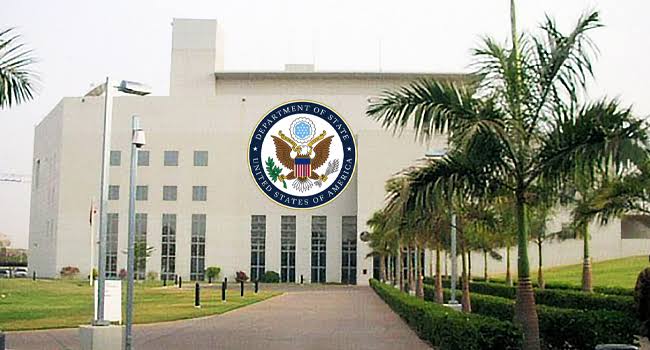
The United States Embassy Abuja has cancelled all visa appointments in the nation’s capital following growing security concerns across parts of the country.
The development has affected hundreds of applicants, with the mission asking them to await further instructions on new dates.
The announcement was made on Thursday through the official X handle of the U.S. mission in Nigeria.
In a short notice, the embassy confirmed that all scheduled visa interviews in Abuja have been suspended for now.
Applicants were told to monitor their emails for updates regarding rescheduling.
The statement reads: “U.S. Embassy Abuja is closed for visa appointments. Applicants should check their email for details on rescheduled appointments.
“Visa operations at U.S. Consulate General Lagos continue. American citizen services are available in emergencies and by appointment.”
While the embassy did not go into full details in its public notice, the decision comes shortly after the United States Department of State authorized the departure of non-essential staff and family members from its Abuja mission. The move followed what officials described as a worsening security situation in parts of Nigeria.
An updated travel advisory released by the Department has also raised fresh concerns among both Nigerians and foreign nationals. The advisory urged American citizens to reconsider travelling to Nigeria due to persistent threats, including crime, terrorism, kidnapping, and civil unrest.
Nigeria remains under a “Level 3: Reconsider Travel” classification, according to the U.S. government. However, several states have been placed under a stricter “Level 4: Do Not Travel” warning.
Among the states listed are Borno, Jigawa, Kogi, Kwara, Niger, Plateau, Taraba, Yobe, and parts of Adamawa, where terrorism and kidnapping risks are said to be high. Other states such as Bauchi, Gombe, Kaduna, Kano, Katsina, Sokoto, and Zamfara were also flagged over security concerns linked to unrest and criminal activities.
The advisory has triggered mixed reactions within Nigeria. The Federal Government of Nigeria has pushed back against the assessment, describing it as “unbalanced.” Authorities insisted that the report does not fully reflect ongoing efforts to address insecurity across the country.
Officials also called on international partners to ensure that travel advisories are based on accurate and updated information, warning that such reports could negatively affect Nigeria’s image and economic activities.
Despite the situation in Abuja, visa processing and other consular services continue at the U.S. Consulate in Lagos, which has not been affected by the latest directive.
The development is expected to cause delays for many Nigerians seeking travel to the United States, especially those with urgent appointments or time-sensitive applications.