
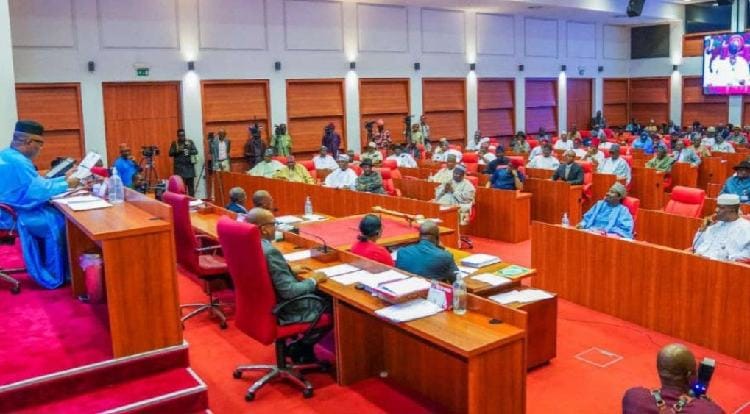
The Senate has issued a fresh ultimatum to the Nigerian National Petroleum Company Limited, (NNPCL) directing its management to appear before the committee on public accounts by April 29 to explain ₦210 trillion flagged in audit reports spanning 2017 to 2023.
The committee ordered Bayo Ojulari, the group chief executive officer of NNPCL to appear alongside Mele Kyari, the immediate past GCEO on the scheduled date.
Also expected before the panel are former chief financial officer Umar Ajia, Bala Wunti, and the company’s external auditors.
The directive followed a motion moved by Senator Osita Izunaso and seconded by Senator Adams Oshiomhole during the committee’s sitting.
Senator Aliyu Wadada, chairman of the committee said the huge sums raised in the audit reports must be properly explained, insisting that Nigerians deserve clear and convincing answers.
According to him, earlier responses submitted by the company to 19 audit queries failed to satisfy lawmakers.
“This committee, and by extension, the Senate, is not satisfied with the blanket explanation given by NNPCL on ₦103 trillion, which it claimed represents liabilities,” Wadada said.
He noted that liabilities usually include specific components such as retention fees, legal fees and audit fees, stressing that each item must be fully broken down.
The committee also demanded details of the remaining ₦107 trillion, which the company reportedly described as joint venture cash call expenses and funds tied to unnamed defunct banks.
“Detailed explanations are also required for the ₦107 trillion which NNPCL said was expended on joint venture cash calls as well as funds allegedly owed by some defunct banks whose identities were not disclosed,” he added.
Wadada said the Senate had granted the company an additional two weeks but warned that the new deadline must be honoured without fail.
Earlier, Senator Abdul Ningi urged the committee to invoke the powers of the National Assembly to compel attendance, citing repeated disregard for legislative invitations.
“We must treat this matter with utmost seriousness. The strength of democracy rests significantly on the authority of the legislature,” he said.
He added that growing reluctance by public institutions to honour summonses was weakening parliamentary oversight and accountability.