
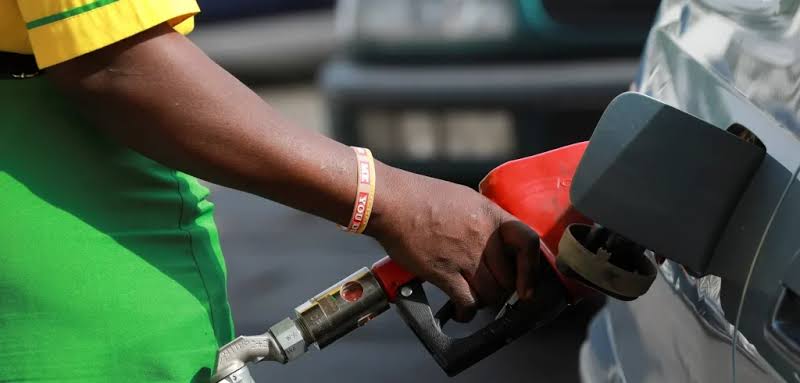
The pump price of Premium Motor Spirit, popularly called petrol, is nearing ₦1,400 per litre in many parts of Nigeria as the crisis between the United States and Iran continues to disrupt global oil markets.
PrimeTimes Nigeria reports that the development followed the failure of the US and Iran to agree on a ceasefire that could reopen the Strait of Hormuz.
As the Middle East crisis lingers, coupled with the reported exit of the United Arab Emirates from the Organisation of the Petroleum Exporting Countries on Tuesday, petrol prices have continued to rise.
Brent crude, which stood at $105 per barrel on Monday, jumped to $118 on Wednesday.
Following the increase in crude prices, the Dangote Petroleum Refinery raised its petrol gantry price from N1,200 to N1,275 per litre.
Price data obtained from Petroleumprice.ng and confirmation from a Dangote refinery official on Wednesday showed that the refinery increased its petrol loading price from ₦1,200 to ₦1,275 per litre, while coastal supply prices rose to ₦1,215 per litre.
A source familiar with the development who spoke with Punch said the refinery halted its pro forma invoice entry process around 4 pm on Tuesday, disrupting normal supply scheduling across its loading system.
According to the source, the suspension led to an immediate stoppage of both petrol and diesel sales to marketers.
NNPC Raises Crude Prices
The price increase came as the Nigerian National Petroleum Company Limited (NNPCL) raised the official selling prices of all 37 Nigerian crude grades for May-loading cargoes, according to a report by Oilprice.com.
The report stated that Nigeria was reaping the benefits of the US-Iran war, as NNPC increased the price of its flagship grade, Bonny Light, by $6.13 per barrel for May when compared to April.
The report stated, “Nigeria reaps the benefits of the Iran war. Nigeria’s national oil company NNPC has raised the official selling prices of all 37 Nigerian crude grades for May-loading cargoes, hiking its flagship grade Bonny Light by a whopping $6.13 per barrel compared to April, while Forcados is up by $7.01 per barrel.”
The development had raised concerns that the Dangote refinery could pay more for crude, thereby pushing up fuel prices.
Filling Stations Adjust Pump Prices
Checks showed that filling stations quickly raised pump prices from an average of ₦1,250 to over ₦1,300 per litre on Wednesday in Lagos and other South-West states.
In Lagos and Ogun states, petrol is sold between ₦1,315 and ₦1,350 per litre.
NNPC filling stations around the Mowe/Ibafo axis of the Lagos-Ibadan Expressway sold petrol at ₦1,315 per litre, while Mobil sold at ₦1,320 per litre.
Prices were higher in the North and other areas far from the Dangote refinery, where petrol was raised to about ₦1,400 per litre.
Residents of Ogun border communities said petrol was sold close to ₦1,700 per litre because the Federal Government had not allowed the supply of petroleum products in their areas.
The National President of the Petroleum Products Retail Outlet Owners Association of Nigeria (PETROAN), Billy Gillis-Harry, said petrol prices may continue to rise unless the Middle East crisis is de-escalated.
He said marketers were facing sudden price volatility, which had made business decisions difficult.
Gillis-Harry said, “This is what we have been introduced to, price volatility. And then the government is not making any statements about it, so it’s worrisome. At least, the government could come up with some measures.
“We are making some gains now on the price of crude oil. The government can give some back to reduce the cost of transportation, so food is not going to be expensive, along with a few other things. That’s what we have advised.”
He warned that petrol could rise above N1,500 per litre if the crisis persists.
“If you go back to our predictions, I stated it there because Mr Trump is not very clear as to what he wants, in my opinion; if it is to decimate the Iranian nuclear facility or if it is to take over the crude oil as they are taking over Venezuela’s. I don’t think we know what he wants exactly. So we are not sure we are seeing the end of that crisis,” he said.
Retailers Seek Local Pricing
Gillis-Harry said Nigeria must improve production and refine more crude locally.
He added, “So we should pay attention to all those areas and increase our production value and production speed so we can at least clearly put 2 million barrels into domestic refining.
“That will be much better because we will then become a refining hub to guarantee jobs, improve businesses, and make our economy more active.”
He said the Dangote refinery had shown its influence in the downstream sector by changing prices, adding, “Dangote has increased the price again because he is the lord of the manor. So we will keep adjusting.”
The PETROAN president said the NNPC crude price hike also contributed to the increase in petrol prices.
He said, “Every single increase from any quarter is because we are not trading locally. All products in Nigeria are still internationally benchmarked.
“Regardless of whether we’re paying naira for crude for local refining, it’s still measured in the dollar equivalent. The only thing it has done is that you’re not going to scramble for forex to buy the crude that you’re going to refine here.”
He urged the government to extend the naira-for-crude privilege to other refineries producing or preparing to produce petrol.
Local refiners also urged the Federal Government to stop using international pricing benchmarks for crude supplied to domestic refineries.
They argued that the current structure inflates costs and weakens local refining.
The spokesperson for the Crude Oil Refiners Association of Nigeria, Eche Idoko, said crude supplied to local refineries should be priced based on a locally designed arrangement instead of Brent.
Idoko said, “If you are using Brent to benchmark our pricing, the factors that are affecting the Brent pricing will still affect the price at which you are landing crude here.
“What we have always insisted on is that those elements in Brent that do not apply to the trade between the local refinery and the oil producers should be discounted. And like that, you get the actual cost of crude for local refineries.”
An economist, Bismarck Rewane, said one option available to the government was to sell crude to Dangote refinery at a fixed price.
He said, “One of the options that can be explored is that the Federal Government of Nigeria agrees to sell crude at a particular price to the Dangote refinery with the assurance that the price of refined products does not increase.”