
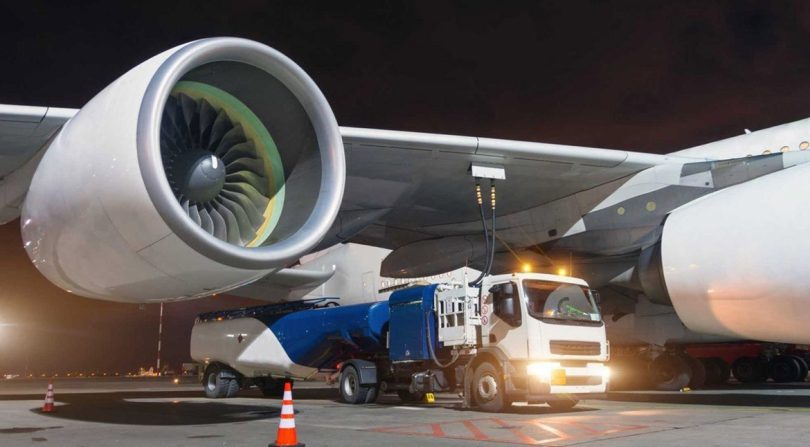
The Nigerian government is capping jet fuel prices and allowing airlines to get supplies on credit as part of efforts to avert flight disruptions caused by soaring fuel costs.
Reuters reported that the Nigerian Midstream and Downstream Petroleum Regulatory Authority (NMDPRA) said in an internal document that aviation fuel should sell for N1,760 to N1,988 ($1.29 to $1.46) per litre in Lagos and N1,809 to N2,037 in Abuja, based on benchmarks from April 17 to April 23.
The decision follows emergency talks after airlines threatened to go on a strike, warning that jet fuel prices had jumped by more than 300 per cent, forcing fare increases and raising the risk of capacity cuts.
The strike was averted after the federal government met with the Airline Operators of Nigeria (AON) and other stakeholders.
President Bola Tinubu last week approved 30 per cent relief on airlines’ debts to aviation agencies and ordered fuel marketers, airlines and regulators to agree on a “fair” fuel price within 72 hours to prevent the sector-wide shutdown that would have impacted the country’s economy.
The talks also agreed to grant airlines a 30-day credit window to pay for fuel and tasked the aviation ministry with mediating debt disputes between operators and oil marketers, according to the document.
The NMDPRA also formed a technical committee, which recommended that fuel marketers sell directly to airlines within the indicated price range to cut costs and improve supply-chain transparency.
The committee also urged regulators to engage Dangote Petroleum Refinery and Petrochemicals over the increased premiums applied to international benchmarks used to price jet fuel.
Other recommendations include validating airside fuel distributors with adequate infrastructure, potentially reducing the number of authorised suppliers at airports, and considering jet fuel for Nigeria’s Crude-for-Naira initiative to limit airlines’ foreign exchange exposure. So far, the Crude-for-Naira has only been for upstream operations.
The cost of fuel has generally risen in the last two months due to the escalating war with Iran by the US and Israel, which has triggered one of the most severe energy shocks in decades. Oil prices are currently above $100 per barrel as markets react to escalating tensions and the risk of prolonged disruption.
At the centre of the crisis is the Strait of Hormuz, a chokepoint through which roughly one-fifth of global oil supply flows. With shipping constrained, the effects are cascading across the global economy, raising fuel costs, fueling inflation, and increasing the risk of economic slowdown across many economies. This is forcing airlines to raise fares, curb growth plans and rethink forecasts.