
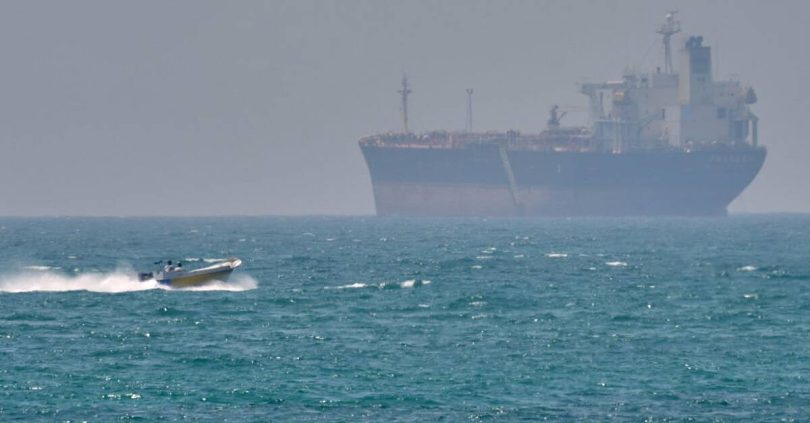
Iran doubled down on its pledge to restrict ships passing through the Strait of Hormuz as long as the US blockade of Iranian ports remains in place, as mediators scrambled to secure further talks before the ceasefire expires this week.
Iranian parliamentary speaker Mohammed Bagher Qalibaf said in a televised interview that Tehran would continue to threaten commercial vessels transiting the critical waterway, after it fired on ships attempting to pass on Saturday.
“It is impossible for others to pass through the Strait of Hormuz while we cannot,” Mr Qalibaf, who is Iran’s chief negotiator in talks with the US, said.
Iran’s navy has warned ships against transiting the strait, a chokepoint through which roughly one-fifth of the world’s oil normally passes.
After a brief uptick in transit attempts on Saturday, vessels in the Persian Gulf held their positions, wary after two India-flagged ships were fired on mid-transit and forced to turn back.
Their retreat returned the strait to its pre-ceasefire status quo, threatening to deepen the global energy crisis and push the parties toward renewed conflict as the war entered its eighth week.
The fragile ceasefire in place between the US and Iran is due to run out by Wednesday.
Iran on Saturday said it had received new proposals from the US and Pakistani mediators were working to arrange another round of direct negotiations.

For Iran, the strait’s closure — imposed after the US and Israel launched the war on February 28 during talks over Tehran’s nuclear programme — is perhaps its most powerful weapon, threatening the world economy and inflicting political pain on US President Donald Trump.
For the US, the blockade squeezes Iran’s already weakened economy and pressures its government by denying it long-term cash flow.
Though the ceasefire has held, the standoff in the strait threatens to plunge the region back into a war that has killed at least 3,000 people in Iran, more than 2,290 in Lebanon, 23 in Israel and more than a dozen in Gulf Arab states.
Thirteen US service members have also been killed.