
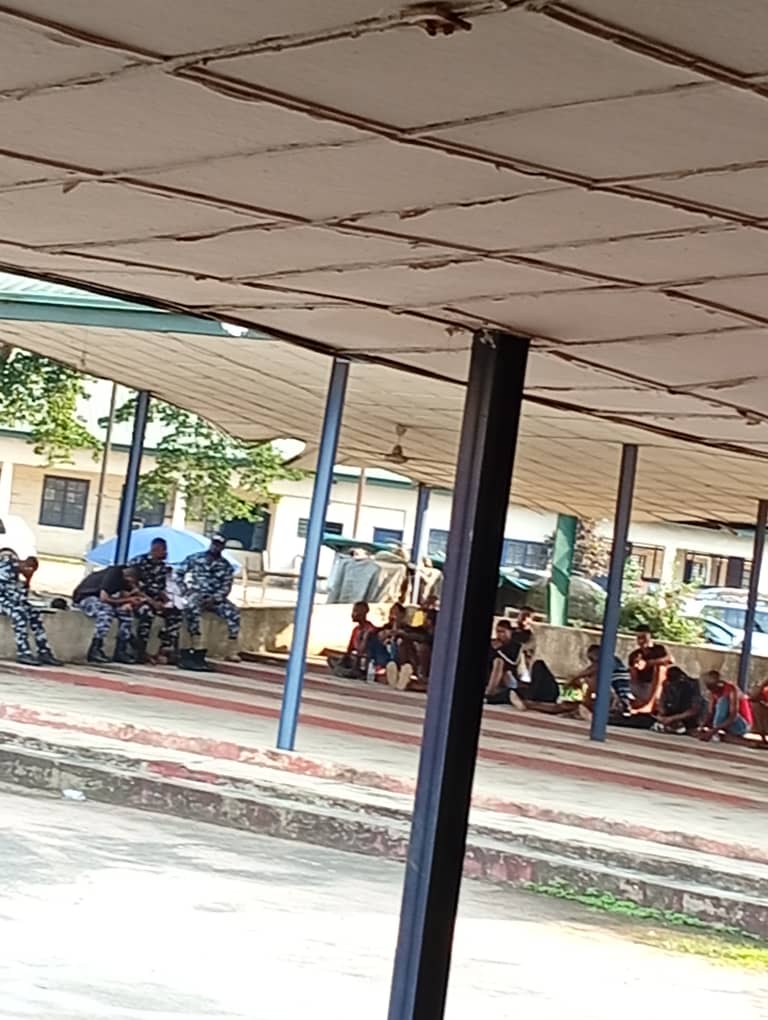
The Rule of Law and Accountability Advocacy Centre (RULAAC) has petitioned the Inspector-General of Police over serious allegations that the Imo State Police Command deliberately relocated detainees from the Anti-Kidnapping Unit facility, popularly known as Tiger Base, in order to conceal poor detention conditions during official inspections.
According to a statement signed by RULAAC’s Executive Director, Okechukwu, says credible reports indicate that on 16 and 17 April 2026, detainees were removed from their cells at Tiger Base and moved to the premises of the Magistrate Court in Owerri. They were allegedly held there for several hours without food, water, or access to basic necessities while an anticipated inspection visit took place.
RULAAC claims the relocation was designed to present a false picture of compliance during oversight visits, with detainees returned to their original conditions immediately after the inspections ended.
The advocacy group expressed concern that such actions, if proven, would violate constitutional protections on the dignity of the human person as well as Nigeria’s obligations under international standards for humane treatment of detainees. It also questioned the integrity of existing police oversight and inspection mechanisms.
In a public statement issued earlier, the Imo State Police Command confirmed that a Deputy Inspector-General of Police had conducted an unscheduled visit to the facility and reiterated its commitment to human rights standards.
However, RULAAC noted that several key questions remain unanswered, particularly regarding detainee location records, custody documentation, and verification of physical presence during the inspection.
The centre has therefore demanded an immediate, independent and transparent investigation into the allegations.
It called for a full audit of all custody records and detainee movement logs covering the period in question; private interviews with detainees conducted without the presence of police officers; the active involvement of the National Human Rights Commission and the Nigerian Bar Association in the investigative process; and immediate safeguards to protect detainees, whistleblowers and complainants from any form of intimidation or retaliation.
Nwanguma warned that failure to address the allegations would further erode public trust in law enforcement institutions.
“The credibility of policing and oversight in Nigeria depends not only on official statements of compliance, but on demonstrable transparency and accountability in practice,” the petition stated.
The group described the matter as one that requires more than administrative clarification and urged the Inspector-General of Police to ensure credible public accountability through swift and impartial scrutiny.