
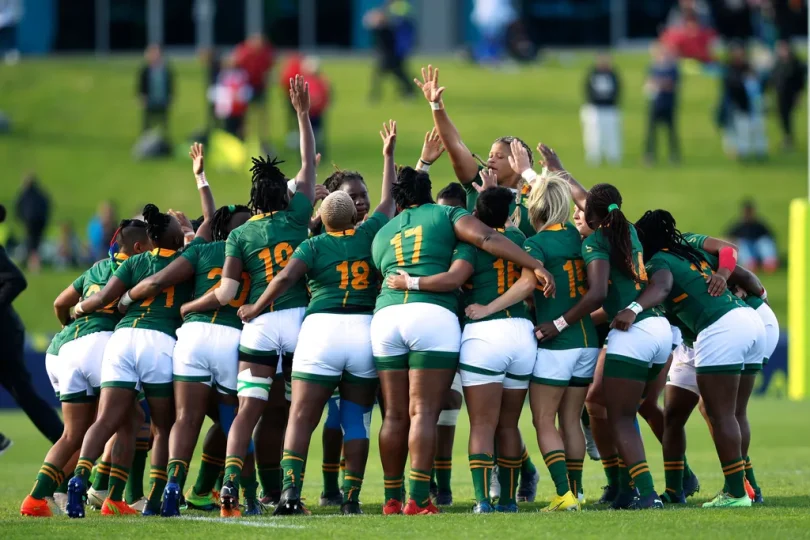
The SARU made rugby news in 2024 when they signed a landmark $375 million deal with US-based Ackerley Sports Group, consolidating sponsorship, broadcasting, content and match-day revenue into a single commercial entity.
In 2025, they reported commercial income surged 74%, drawing in FNB, MTN, Coca-Cola and Samsung, while merchandising receipts more than doubled in the most recent reporting cycle.
The Springbok brand and commercial model demonstrate what structured investment in rugby infrastructure can deliver. Other rugby unions are taking note.
Rugby Africa’s appointment of TV Media Sport to distribute continental broadcast rights through 2026 marked a turning point in the sport’s media commercialisation.
SuperSport, which carries rugby across South Africa, Nigeria and Sub-Saharan Africa, drew 3.7 million viewers during AFCON 2024 alone, part of a continent-wide audience of 22.3 million, giving rugby sponsors meaningful access to one of Africa’s most powerful broadcast platforms.
Beyond the broadcasters, technology and finance companies are moving into the space: gaming brand SportPesa committed $650,000 to the Kenya Rugby Union in 2024, while Zimbabwean fintech Mukuru sponsors the national team’s World Cup qualification campaign.
These deals reflect a broader shift in which rugby is being used as a brand visibility vehicle in high-growth markets.
World Rugby has identified Nigeria as one of six nations experiencing strong rugby growth, and the commercial indicators are beginning to follow participation.
An estimated 200,000 children play the sport at school level, building a pipeline of future fans and consumers that brands and broadcasters are increasingly alert to.
With a population exceeding 220 million and a rapidly expanding middle class, Nigeria represents the kind of untapped consumer market that global sponsors and broadcasters are actively trying to reach. Rugby’s growing grassroots presence there makes it an increasingly credible vehicle for that ambition.
Rugby in Africa is transitioning from a participation story into a business one, with private equity circling and sponsorship diversifying beyond traditional markets. Now that an expanded Rugby World Cup is approaching in 2027- , the conditions for sustained commercial growth across the continent are more favourable than they have ever been.