
SEATTLE – For the past two years, Amazon, Google, Microsoft and Meta have repeatedly set records for how much they are spending on artificial intelligence.
On April 29, the four giants did it again.
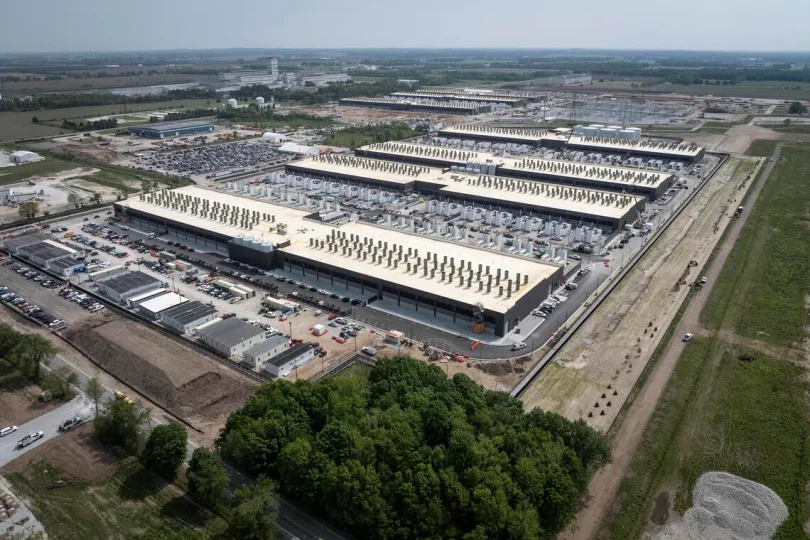
In the first three months of the year, the four companies reported in their financial results, they plowed a total of US$130.65 billion (S$167.29 billion) into capital expenditures, largely spending on data centres that power AI. That figure – which was another record – was more than three times what the Manhattan Project cost to develop nuclear bombs and 71 per cent higher than what the tech giants spent in the same quarter a year earlier.
All of the companies said they would be spending even more, totalling roughly US$700 billion this year. Meta, for one, raised its spending forecast for 2026 to between US$125 billion and US$145 billion, up from its previous prediction of US$115 billion to US$135 billion. Google also boosted its projection, to at least US$180 billion, and said its spending would be “significantly” higher next year.
“Every sign that we’re seeing in our own work and across the industry gives us confidence in this investment,” Mr Mark Zuckerberg, Meta’s chief executive, said on a call with investors.
The spending showcased how the biggest tech companies are deep into a wildly expensive era of AI, which many of them see as an unparalleled chance to become far larger. And as the frenzy escalates, it’s increasingly only the planet’s wealthiest companies that have the money to lead this race.
That’s because Amazon, Google, Microsoft and Meta continue to dominate in core businesses that spew cash, such as serving ads on YouTube or Instagram, delivering items in a few hours or tallying cells in Excel. The companies generated a combined US$431 billion in sales in the quarter and made US$151 billion in profit.
For much of last year, Wall Street was jittery about whether the tech spending would bring in enough returns, but some investors have backed away from those fears. That’s partly because of the recent success of Anthropic’s Claude Code, an AI tool that lets users quickly generate code without knowing programming and a product that has become a juggernaut. This month, Anthropic said its March sales were the equivalent of US$30 billion a year, up from US$9 billion at the end of 2025. NYTIMES