
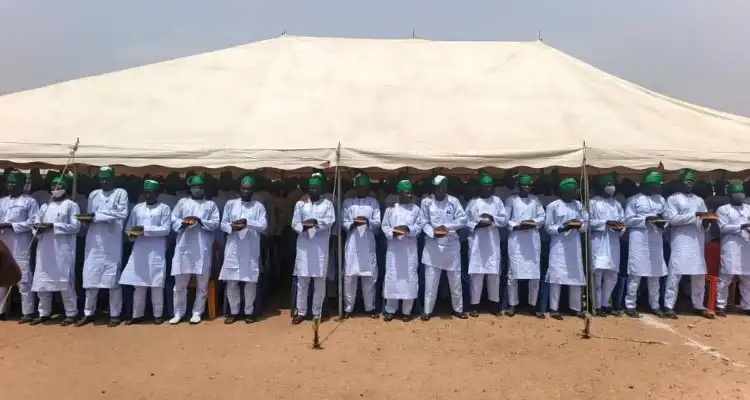
No fewer than 744 former terroists and victims of violent extremism have completed rehabilitation under the federal government’s de-radicalisation, rehabilitation and reintegration initiative, operated through operation safe corridor.
The graduation ceremony, held in Gombe State on Thursday, marked another phase in the national effort to reintegrate individuals affected by long-running insecurity in the North-East.
Breakdown of the participants showed a wide geographical spread across the country, with the highest number — 597 — from Borno State, followed by 58 from Yobe State.
Other beneficiaries came from Adamawa, Kano, Katsina, Bauchi, Plateau and several other states, alongside foreign nationals from Burkina Faso, Cameroon, Chad and the Niger Republic.
Speaking at the event, Gen. Olufemi Oluyede, the chief of defence staff stressed that the programme is not a reward for wrongdoing but a structured security strategy.
“This is not a reward but a deliberate strategy to reduce violence, weaken extremist recruitment and promote long-term stability,” he said.
He added that sustainable peace requires more than military action, noting that rehabilitation and reintegration remain essential pillars of Nigeria’s counter-insurgency approach.
Addressing the graduates, Oluyede urged them to embrace a new path and avoid relapse into violence.
“Nigeria is giving you a second chance; do not waste it,” he said, warning that they must return to their communities as responsible citizens committed to peace.
Brig. Gen. Yusuf Ali, coordinator of operation safe corridor said the programme was designed as a structured response to insurgency, combining security operations with rehabilitation efforts.
He explained that participants underwent psychosocial support, vocational training, civic education and ideological reorientation to prepare them for reintegration into society.
“This process is not merely about disengagement; it is about rebuilding identity, restoring values and preparing individuals to return to society as responsible citizens,” he said.
Ali noted that many of the beneficiaries were victims of coercion, abduction or circumstance, stressing that their reintegration requires collective support from communities, families and governments.
He added that “state governments, community leaders, families and institutions all have critical roles to play in ensuring that these individuals are accepted, monitored and supported.”
Muhammad Yahaya, the governor of Gombe state, represented by Yusuf Musa, his SSA on security matters and intergovernmental affairs, Ambassador Yusuf Musa, represented at the event, reaffirmed support for the programme, describing it as part of the federal government’s broader commitment to peacebuilding and national stability.